
Roman Road Kill
Be dead serious when crossing streets in Rome. Sidewalks can be dangerous, too.

When about to cross a car-clogged Rome street, I imagine a phalanx of souped-up chariots racing to catch some bloody spectacle at the Colosseum.
Then there are the motorini (motor scooters) that react to red lights like a bull to a waved flag. It’s like a dare to charge ahead.
Adding to pedestrians’ peril, motor scooters zip helter-skelter down narrow streets or crooked alleys, sometimes against the flow of traffic, and not rarely on sidewalks, too.
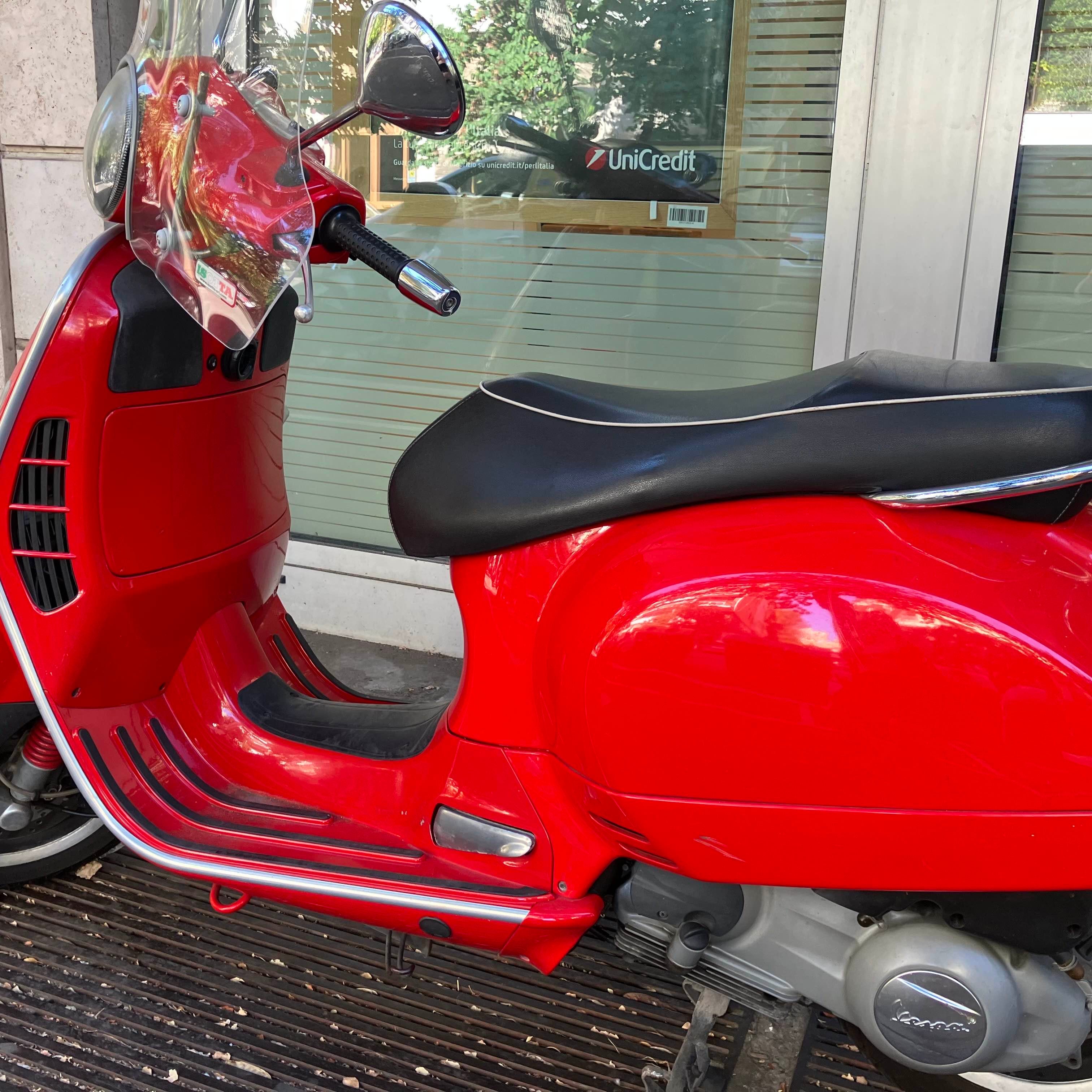
This shiny parked Vespa is fun to look at, but maybe better not to take chances with it when it zooms off the sidewalk.
Italy is ahead of the pack in the 27-nation European Union when it comes to passenger cars per capita. According to EU statistics, as of 2024, there were 701 cars per every 1,000 inhabitants in Italy, followed by Luxembourg and Finland.
Sometimes it feels as if at least 701 of those cars are bearing down on me when I step into a crosswalk, where vehicles are supposed to yield to pedestrians — but often do not.
Running red lights, speeding, passing on the right and refusing to respect the right of way to pedestrians in crosswalks are among the scary driving habits that combine to help give Rome what one Italian newspaper called the “macabre record” of having the most dangerous streets in Italy.
Some sobering statistics:
In the first eight months of this year, 22 pedestrians were killed in Rome; while in Milan, a city roughly half as populous, there were two pedestrian fatalities. Those statistics come from the Pedestrians Observatory, which is affiliated with an association that supports highway police. The Observatory keeps a month-by-month and region-by-region casualty count in Italy.
If that’s not unsettling enough, consider this: according to the Observatory’s count, out of the 248 pedestrian deaths in Italy during this year’s first eight months, 106 of them occurred in crosswalks.
Known as a “striscia pedonale” — pedestrian stripe — or as zebra stripes, Italian crosswalks are supposed to be a safe place to get from one side of the street to the other.
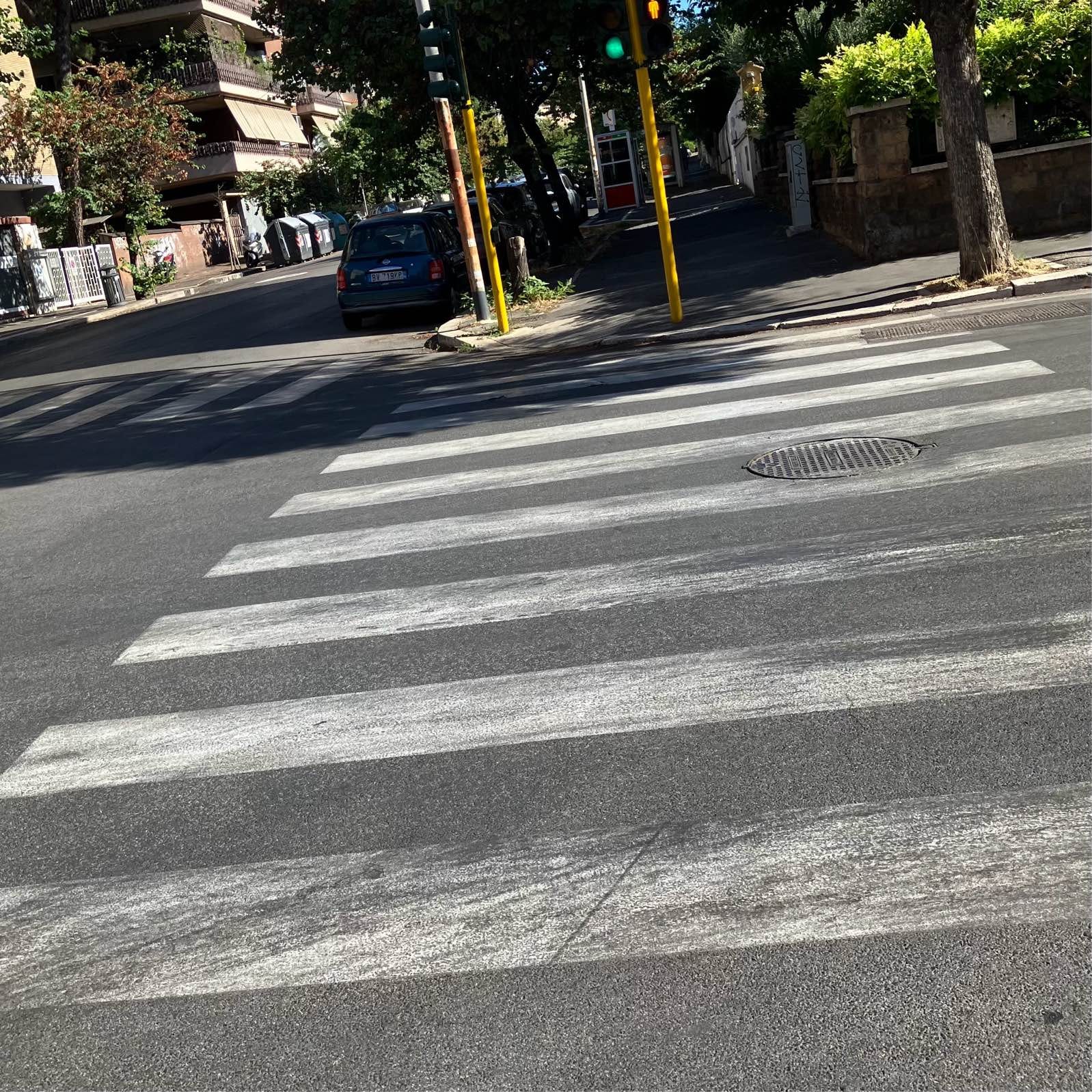
Stripes in Rome’s crosswalks often fade to the point they’re more a question mark than an exclamation point to drivers signaling: “Stop for pedestrians.”
Italy’s traffic laws regulate crosswalk conduct — both for the driver and the pedestrian.
Motorists must stop at a crosswalk for pedestrians, even if the stroller hasn’t yet taken that fateful step into the striped space but it’s clear that the person is about to do so. Failure to stop can bring a fine as high as 665 euros (about $800 dollars). Violators can have several points shaved from their license.
Pedestrians have responsibilities, too. Crossing outside the striped area by more than eight inches can cost the pedestrian a fine, up to 100 euros.
But to abide by the rules, one has to notice those zebra stripes.
More than once, I have watched Rome’s road crews spray white paint on the stenciled spaces late at night. But within days, the bright white at best seemed a mottled gray, at worst barely visible.
Romans who return home after visiting other European metropolises have taken to writing letters to local newspapers to wonder why other cities manage to have more visible stripes.
Faced with seemingly maniacal motorini drivers and fast-fading crosswalks stripes, pedestrians in Rome need survival strategies.
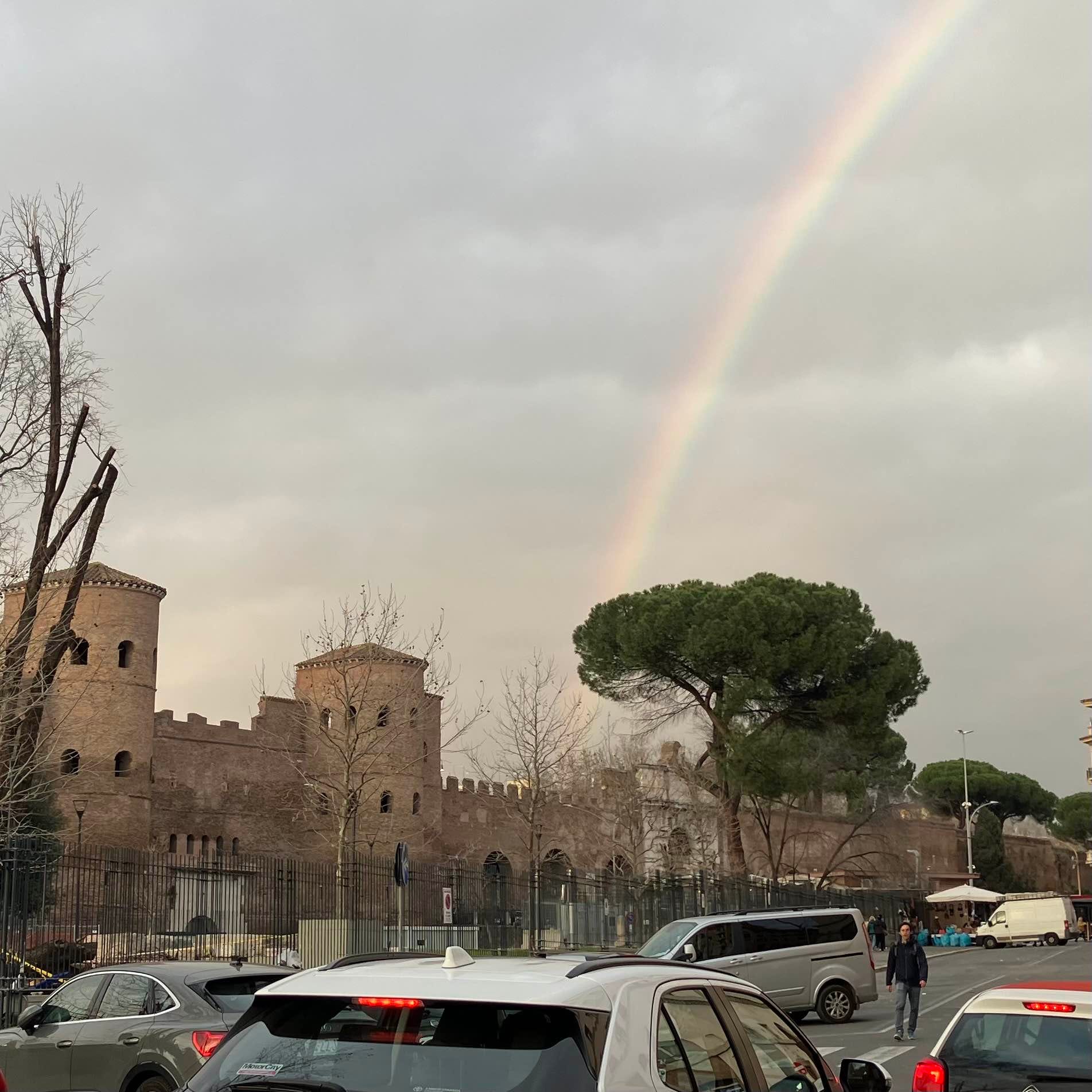
With street vendors or vehicles often occupying sidewalks, the middle of a street sometimes is the only way to maneuver through an obstacle course. Maybe a rainbow can serve as a sign a stroller’s destination will be safely reached.
I offered a few suggestions for pedestrians in my Rome travel book, which was published in the 1990s. Today, they sound almost quaint, so wickedly worse driving habits in Rome seem to have become.
And, just think, there were no motorized foot scooters then.
A couple of those suggestions from way back when:
“Wait till several pedestrians gather at a corner and then cross as a bunch.”
With the post-pandemic explosion in tourism in Italy, finding some out-of-towners looking too frightened to cross shouldn’t be too hard.
And another: “I wince when mothers thrust baby carriages into traffic on the assumption that every Italian loves a child. Perhaps an empty stroller might be safer and still do the trick.”
After I witnessed a Rome city bus — a bus that I would regularly take to and from my office — strike a man who looked to be in his 80s as it turned at an intersection while he was crossing at a green light, my motto became “never challenge a bus.”
But lest you think, dear reader, that sidewalks offer a reprieve from the stress of crossing Rome’s streets and boulevards, perish that optimistic thought — or you might perish.
All those motorcycles, motorini and motorized foot scooters parked on sidewalks had to get there somehow. While drivers are supposed to walk vehicles down sidewalks to be parked, they almost never do.
One afternoon, as I was stepping out from my condominium’s front gate, a motorino zoomed by on the sidewalk, inches in front of me. Had I exited a second sooner, an emergency room might have become my unplanned destination that day.
I’ve realized what a nerve-wracking toll traversing Rome streets or even venturing down the capital’s sidewalks has taken on me whenever I have gone to Venice, for work or pleasure.
Each time in that lagoon city, at first something seemed to be missing. Then, I would remember, gratefully: There are no motorini darting toward or around me, no cars appearing to want to play a game of “chicken” with me at crosswalks.
My traffic-frayed nerves always relax in car-less Venice.
But I pay for that Venetian reprieve when I return to Rome.
Like someone from continental Europe setting foot in London and unnerved by traffic barreling down the left side of the road, I need a day or two to adjust to Rome’s traffic rules and all the drivers who don’t heed them.
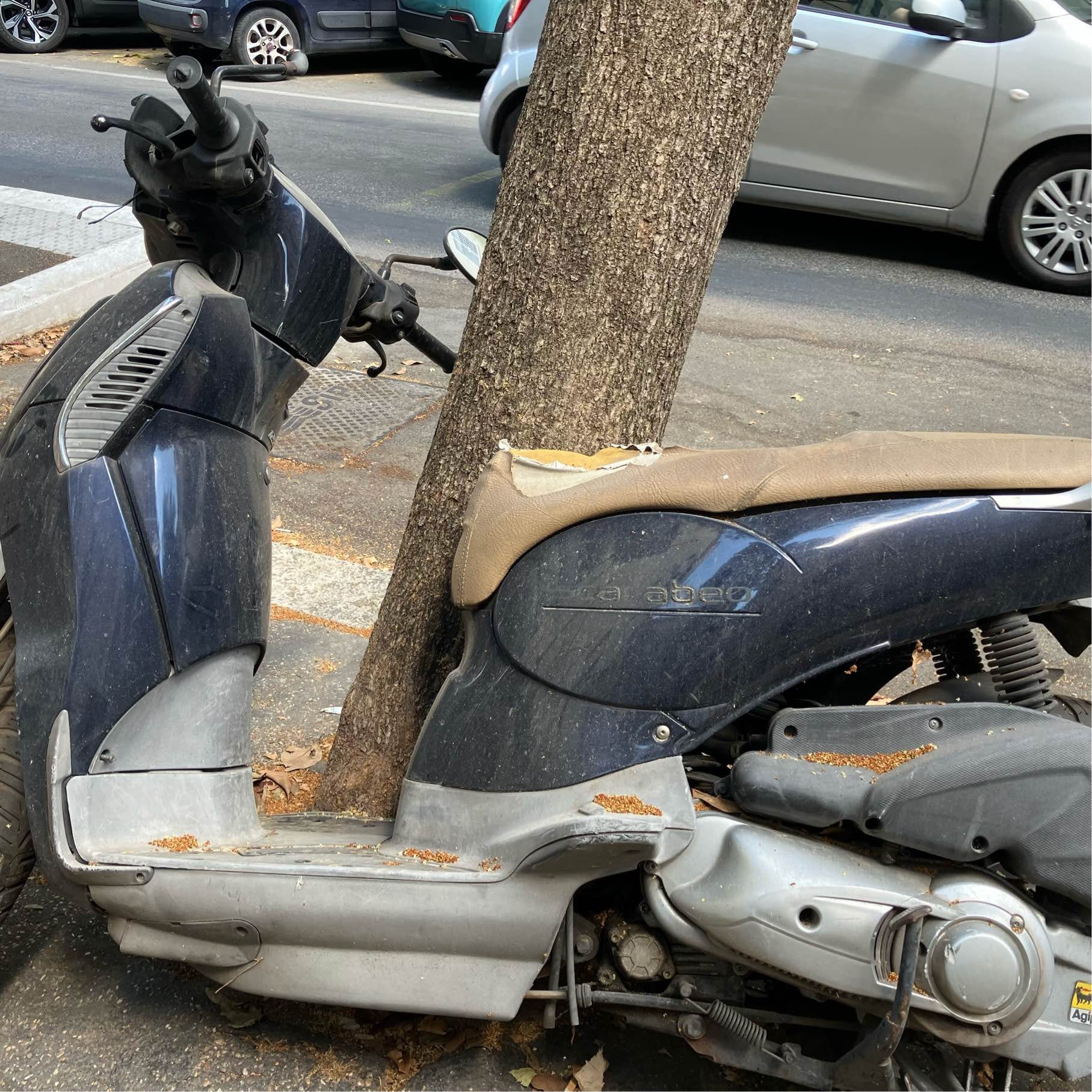
This motorino, parked for months on a Rome sidewalk, looks as if it’s going nowhere. That’s fine by this pedestrian.
I'd been wondering about this. Beyond all of the bad behavior, pedestrian and motorist alike, just the narrowness of Rome's streets seem like they present an inordinate amount of danger for those on foot. But I'd never heard the statistics, which are pretty daunting. You take a lot on faith when you walk down the street in Rome. I think I'll put a little of that faith into caution.
This is very interesting; I really like this kind of deep dive into narrow aspect of the culture.
It's appalling that 22 people have died crossing the street in Rome so far this year. But if you'd asked me out of the blue how many people I thought were mortally injured crossing the street in the city I'd have guessed even more (I've seen it happen first hand twice when I lived in the center).